



Nineteenth Century Instrument Orthogonal Plane Meter
Orthogonal planer is an instrument for measuring the area of a plane, invented around 1851. Its design is based on the principle of orthogonality, and its area is calculated by measuring the boundary of the plane figure. Orthogonal planometers usually consist of a rod with a scale and a moving pointer. The user can record the measurement data by moving the pointer along the boundary of the figure.

Twenties measuring instrument cup cross anemometer

Old Pointer Voltmeter
It is an instrument for measuring voltage and is widely used in electrical engineering, electronic equipment and laboratories. Both DC and AC voltages can be measured and expressed in voltage units of volts. The basic principle of a voltmeter is to determine the voltage by measuring the change in the current in the circuit. Use pointers and dials to display voltage values, usually based on motor or electromagnetic principles. Although intuitive, it is not as good as a digital voltmeter in accuracy and response speed. Widely used in electrical equipment testing and maintenance, electronic circuit debugging, laboratory research and other occasions.

multimeter electronic instrument
It is an electronic measuring instrument used to measure electrical quantities such as voltage, current and resistance. Widely used in electronic technology and other related fields, it is an important tool to detect circuit problems and confirm the status of components. There are many types, including analog and digital, digital multimeters are more common because of more accurate readings and easier operation. There are usually multiple measurement gears, and the user can choose to measure voltage, current or resistance as needed. It is indispensable in the laboratory and industrial fields, and is also extremely popular among home repair and electronics enthusiasts. It is a commonly used tool in electronic engineering and physics teaching.
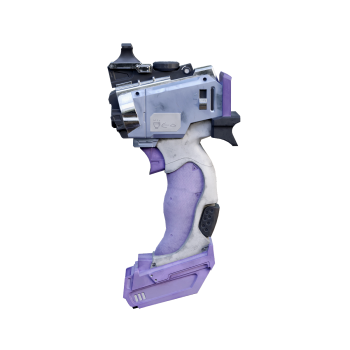
science fiction thermometer
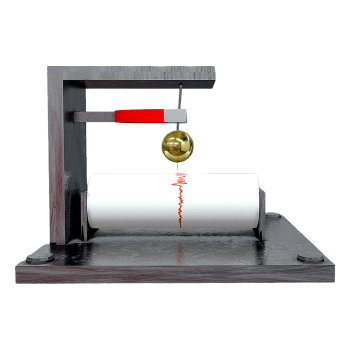
Simple seismic recorder (3D demonstration animation)

DT830D digital multimeter
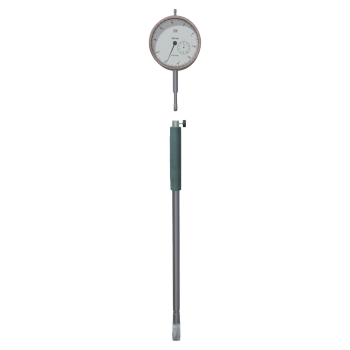
Micrometer during the Soviet era

Astronomical pentameter
The Astronomical Quintant, also known as the Astronomical Goniometer, is an ancient astronomical instrument used to measure the elevation angle of celestial bodies. It consists of a quarter arc and a movable cursor. The principle of the astronomical pentameter is based on the method of triangulation. When the observer raises the astronomical pentameter towards the sky, the cursor can move to align with the line of sight of a celestial body. Surveyors can determine the elevation angle of celestial bodies by reading the scale on the cursor. Usually, the scale on an astronomical pentameter is spaced at intervals of five degrees, hence it is called a pentameter.

Popular Models


Honey Badger (3D animated model)
192 View

Guinea fowl (3D animated model)
163 View

Wild Goose (3D animated model)
185 View

Red Fox (3D animated model)
153 View
Random Model




Black poplar
873 View

Japanese Kagoshima Temple Bell
970 View


Canon EOS-1D X Mark II DSLR Camera
819 View


Pumpkin
500 View
